Add to your RSA Conference experience by joining one of the breakfast symposiums hosted by our valuable sponsors.
Breakfast symposium attendance can be booked at no charge via the Registration Portal.
If you have already registered, please email mail@conference.com.au to add to your existing registration.
Limited spaces, available until sold out.
Breakfast Symposiums are held concurrently on Thursday 18 June from 0715 – 0815
Enhancing Kidney Care: Assisted Peritoneal Dialysis

Presented by
Join Vantive’s breakfast session to hear about Assisted PD and how your dialysis units can prepare to implement this program, where eligible patients can be supported at home to complete PD. Learn how this program could help you offer PD to more patients, and to keep them on PD for longer.
Speaker Biography
Prof Paul Bennett

Adj Professor, Griffith University, QLD, Australia
Adj Professor, Adelaide University, SA, Australia
Paul Bennett is an experienced dialysis nurse and clinical researcher who has worked across Australia and the United States, focusing on pragmatic research strategies to improve the quality of life of people living with chronic kidney disease. With more than 20 years of experience in dialysis nursing, his program of research underpins a person‑centered mission to improve kidney care through the study of dialysis-related symptoms, exercise, laughter and happiness, peer support, patient‑reported outcomes, patient activation, and home dialysis.
Paul is an investigator on three current NHMRC‑funded studies and is actively engaged in national and international leadership and collaboration. He is a founding editor of the Renal Society of Australasia (RSA) Journal, a founding member of both the International Society of Nephrology (ISN) Nurses’ Working Group and the Global Renal Exercise (GREX) Network, and an active contributor to the Kidney Disease: Improving Global Outcomes (KDIGO) Nursing Symptoms Group. He continues to be involved with the ISN Nurses Working Group, GREX Network, and the Renal Society of Australasia.
His recent leadership includes co‑chairing the 2024 KDIGO Nursing Management of Dialysis Symptoms meeting. Paul’s most recent scholarly contributions include serving as lead author of the International Society of Peritoneal Dialysis (ISPD)/GREX Exercise in Peritoneal Dialysis Practice Recommendations and the KDIGO Nursing Dialysis Symptoms Management Report.
Endotoxin: Control, Analysis & Clinical Relevance

Presented by
Topics covered:
- Endotoxin and its relevance
- Methods available to monitor and control endotoxin
- Regulatory requirements and guidelines
Endotoxin control is a critical determinant of safety and clinical outcomes in dialysis therapy, where patients are repeatedly exposed to large volumes of water and dialysate across semi‑permeable membranes. This presentation focuses on the nature and clinical relevance of endotoxins in dialysis applications, highlighting their bacterial origin and their ability to cross dialysis membranes or trigger inflammatory responses. The consequences of endotoxin exposure in hemodialysis—including acute pyrogenic reactions, chronic inflammation, and long‑term complications—are discussed to underscore the heightened vulnerability of dialysis patients.
The presentation also reviews key approaches for monitoring and controlling endotoxin in dialysis water systems and dialysate, emphasizing routine testing, quality control, and practical implementation within dialysis facilities.
Finally, the regulatory and guideline framework specific to dialysis is outlined, including relevant pharmacopeial standards, international norms, and clinical practice guidelines governing water and dialysate quality. By integrating clinical risk, analytical monitoring, and regulatory expectations, this presentation provides a focused overview of endotoxin management as an essential component of safe and effective dialysis therapy.
Speaker Biography
Alan Hoffmeister
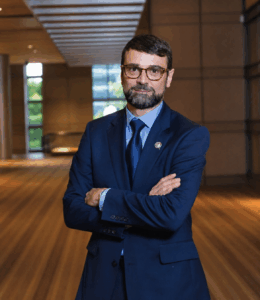
Senior Global Scientific Portfolio Specialist, Charles River Microbial Solutions
Alan Hoffmeister is a leading expert in the Bacterial Endotoxins Test (BET), with more than three decades of experience spanning laboratory operations, contract testing, and global scientific support. His career began in 1988 with a major LAL manufacturer’s European distributor, where he advanced from laboratory supervisor to lab manager. Over the years, Alan has built deep expertise in BET through extensive industry collaboration, including mentorship from pioneers Drs. Jack Levin and James Cooper.
Recognised internationally as a subject matter expert, Alan has delivered workshops, training, webinars, and conference presentations across organisations such as PDA, ISPE, A3P, and Pharmig. His work covers LAL methodologies, product validation, interference and inhibition challenges, data integrity, regulatory considerations, and emerging recombinant BET technologies. He has also contributed to the development of BET protocols, technical guides, and industry‑focused resources.